
Infrastructure as Code in 2026: Terraform vs Bicep vs Pulumi
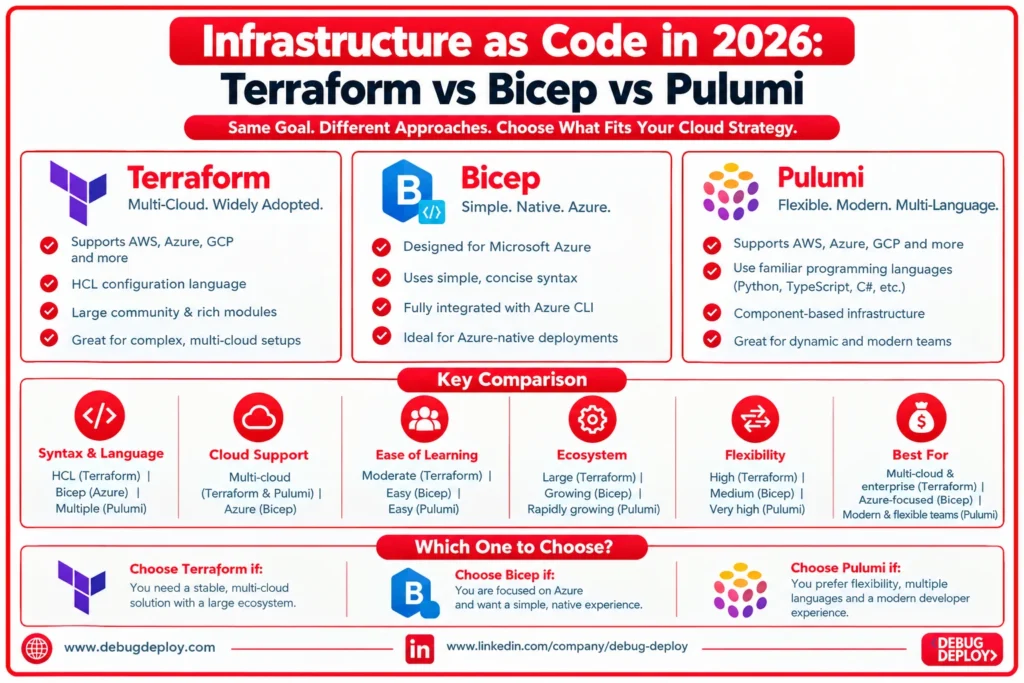
Cloud infrastructure is becoming increasingly complex. Organizations now manage containers, Kubernetes clusters, virtual networks, databases, identity services, AI workloads, and multi-cloud environments. Manually configuring these resources through cloud portals is difficult to scale and can introduce configuration inconsistencies. Infrastructure as Code (IaC) solves this problem by allowing teams to define infrastructure through version-controlled, repeatable code. […]
Top CI/CD Tools Compared: GitHub Actions vs Azure DevOps vs Jenkins (2026)

Modern software teams need reliable CI/CD tools to build, test, secure, and deploy applications quickly. As organizations adopt cloud platforms, Kubernetes, containers, Infrastructure as Code, and DevSecOps practices, choosing the right CI/CD platform has become an important part of software delivery strategy. In 2026, GitHub Actions, Azure DevOps, and Jenkins remain three important options for […]
Platform Engineering vs DevOps: What’s the Difference in 2026?
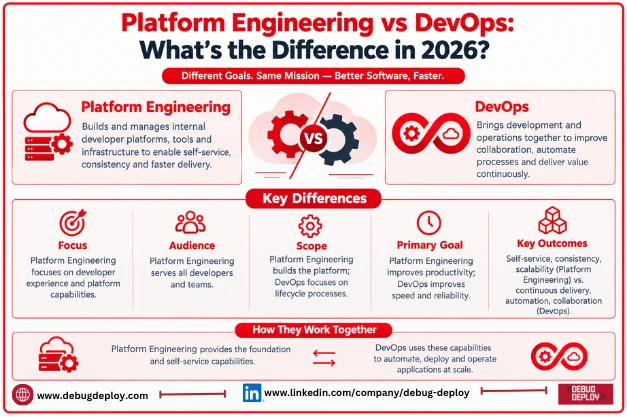
Modern software teams are under constant pressure to build, test, deploy, and operate applications faster while maintaining security, reliability, and scalability. As cloud platforms, Kubernetes, Infrastructure as Code, and automation become standard parts of software delivery, organizations are also changing how development and operations teams work together. Two terms frequently discussed in modern cloud-native environments […]
GitOps 101: Managing Kubernetes Deployments with Argo CD and Flux

A crucial platform for implementing and overseeing contemporary cloud-native apps is Kubernetes. However, when teams, clusters, and apps expand, manually managing Kubernetes deployments may become challenging. A dependable method for constantly managing configurations, application versions, infrastructure, and deployments is essential for development and DevOps teams. GitOps uses Git as the source of truth for application […]
AIOps Explained: How AI Is Automating IT Operations in 2026

The complexity of today’s IT settings is rising. Cloud platforms, containers, APIs, apps, databases, networks, cybersecurity tools, and dispersed workloads across many environments are increasingly managed by organizations. Businesses also want IT staff to maintain dependable digital services, minimize downtime, and identify issues promptly. This is where AIOps are becoming more and more crucial. Artificial […]
Serverless in 2026: AWS Lambda vs Azure Functions vs Google Cloud Functions

The development of contemporary cloud applications now heavily relies on serverless computing. Development teams can deploy application code while the cloud provider takes care of the underlying infrastructure, saving them from having to provision and manage servers. In 2026, AWS Lambda, Azure Functions, and Google Cloud Functions—now known as Cloud Run functions—remain significant serverless platforms […]
What Is Azure Kubernetes Service (AKS)? Explained Simply
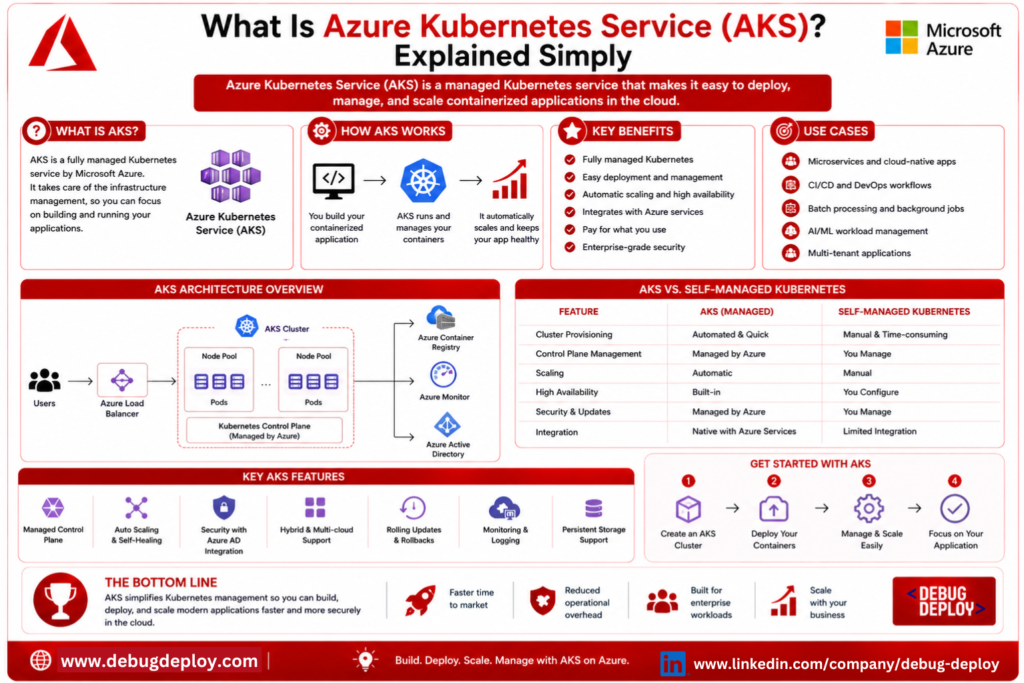
Introduction Cloud-native applications are now the go-to method for creating scalable and dependable software as companies continue to embrace digital transformation. Organizations now use containers—lightweight packages that contain everything an application needs to execute reliably across several environments—instead of creating huge, monolithic programs. Containers increase portability, streamline software deployment, and facilitate application maintenance. Nevertheless, it […]