
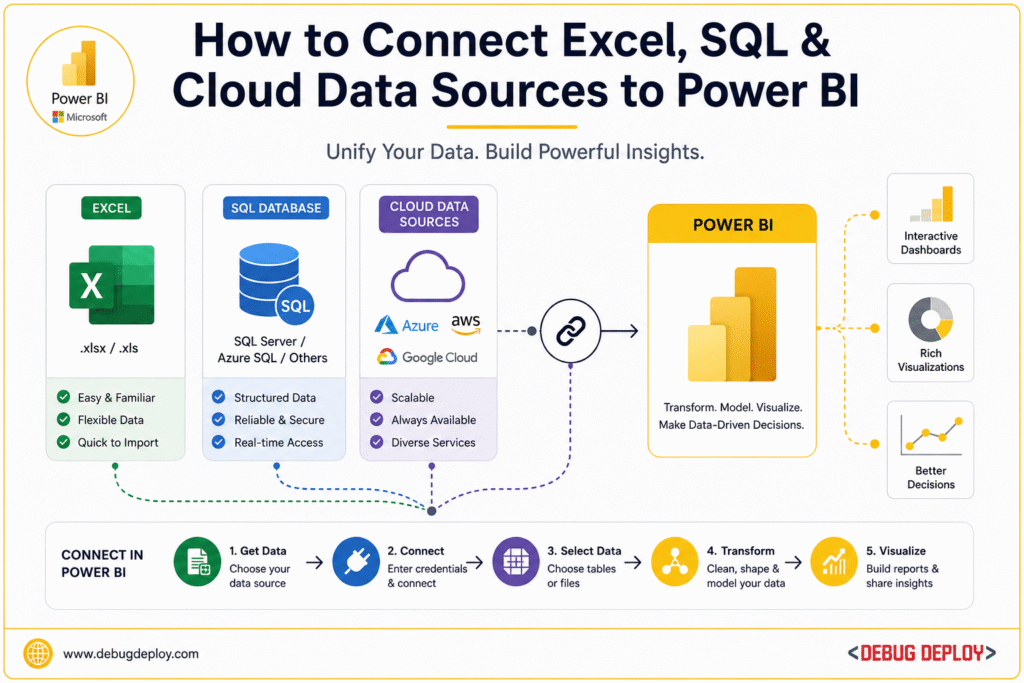
Because it enables businesses to connect, analyze, and visualize data from numerous sources in a single, centralized dashboard, Power BI has emerged as one of the most popular business intelligence and data visualization tools in 2026. Spreadsheets, databases, cloud apps, CRMs, websites, accounting systems, and corporate platforms are all used by modern enterprises to produce data. Analyzing this data becomes challenging and time-consuming without adequate integration.
Connecting to hundreds of data sources, such as Excel files, SQL databases, and cloud platforms, is one of Microsoft Power BI’s greatest advantages. Businesses can use this flexibility to monitor KPIs, automate reporting, build interactive dashboards, and use real-time analytics to make better decisions.
For beginners entering the world of data analytics and business intelligence, learning how to connect different data sources to Power BI is one of the most important foundational skills.
Why Data Connectivity Matters in Power BI
Business intelligence depends heavily on data accessibility. Organizations often store information across multiple systems such as:
Excel spreadsheets
SQL databases
ERP systems
CRM platforms
Cloud applications
Web APIs
Financial systems
Power BI helps combine these data sources into a single reporting environment where businesses can analyze trends, monitor performance, and make informed decisions.
Without proper connectivity, dashboards become incomplete and less effective.
Understanding Power BI Data Sources
Power BI supports three major categories of data sources:
File-based data sources
Database systems
Cloud and online services
Each category serves different business needs and reporting scenarios.
Connecting Excel Files to Power BI
Excel remains one of the most commonly used data sources for Power BI because many businesses already manage operational data using spreadsheets.
Examples include:
Sales reports
Employee records
Inventory tracking
Financial analysis
Marketing data
Step 1: Open Power BI Desktop
Launch Power BI Desktop on your computer. Once opened, navigate to the Home tab.
Step 2: Click “Get Data”
Select:
Home → Get Data → Excel Workbook
Browse your computer and choose the Excel file you want to import.
Step 3: Select Sheets or Tables
Power BI displays available worksheets and tables from the Excel workbook.
Choose the required datasets and click:
Load (direct import)
orTransform Data (for cleaning and modification)
Step 4: Clean and Transform Data
Power Query Editor allows you to:
Remove duplicates
Change data types
Rename columns
Filter rows
Merge datasets
Handle missing values
Data cleaning improves reporting accuracy and dashboard performance.
Step 5: Build Visualizations
Once the Excel data loads successfully, you can create:
Charts
KPI cards
Tables
Dashboards
Trend analysis reports
Excel integration makes Power BI extremely beginner-friendly.
Connecting SQL Databases to Power BI
SQL databases are widely used in enterprise applications because they support structured data storage and large-scale operations.
Common SQL sources include:
Microsoft SQL Server
MySQL
PostgreSQL
Oracle Database
Power BI can connect directly to these databases for real-time reporting.
Step 1: Select SQL Database Connection
In Power BI Desktop:
Home → Get Data → SQL Server
Enter:
Server name
Database name (optional)
Step 2: Choose Connectivity Mode
Power BI offers two main connection options:
Import Mode
Imports data directly into Power BI for faster performance.
DirectQuery Mode
Keeps data in the source database and queries it in real time.
DirectQuery is useful for large enterprise datasets requiring live reporting.
Step 3: Authenticate Access
You may need:
Windows authentication
Database credentials
Azure authentication
Security permissions depend on database configuration.
Step 4: Select Tables and Load Data
Choose the required database tables and import them into Power BI.
Once connected, relationships between tables can be created for advanced reporting and analysis.
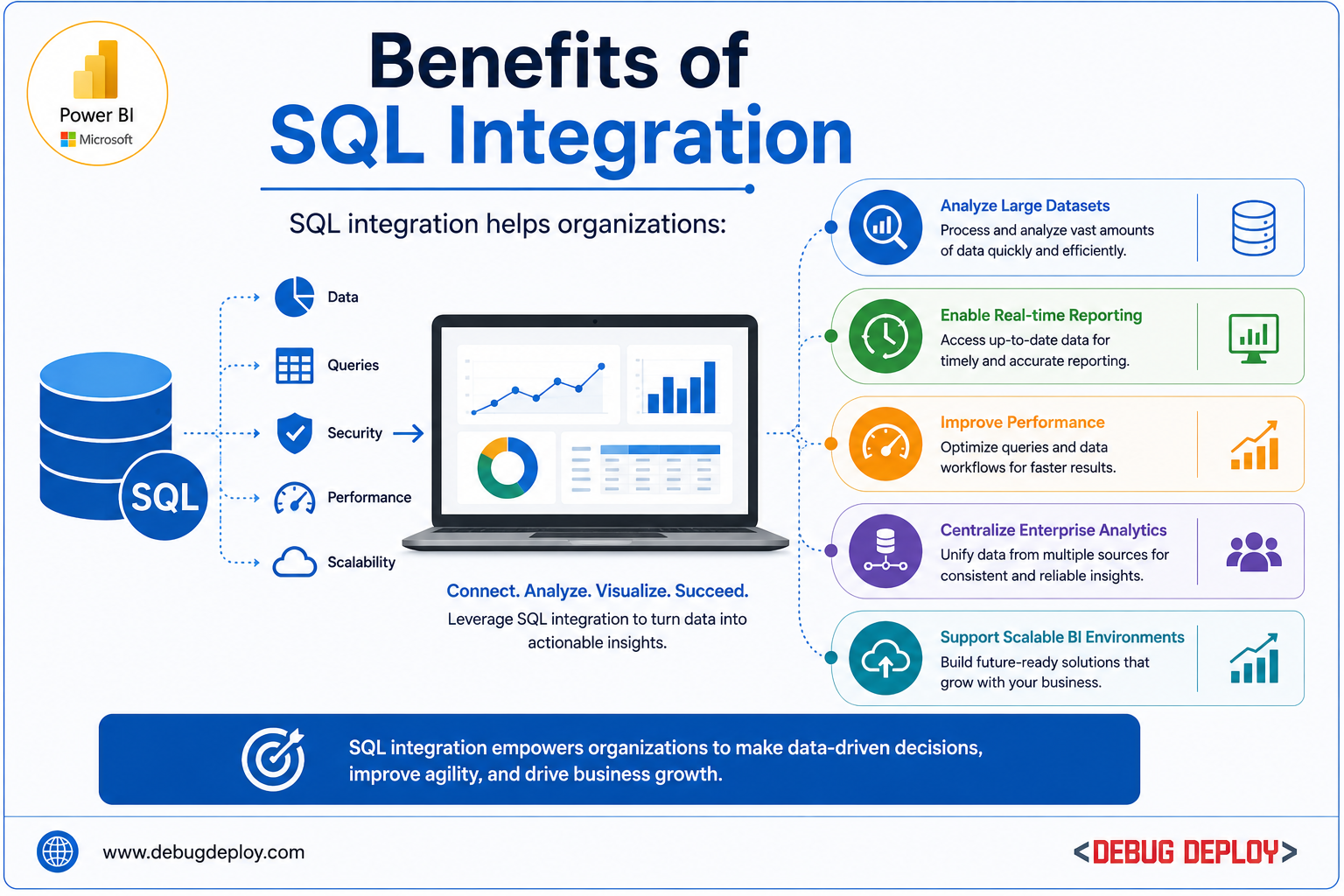
Benefits of SQL Integration
SQL integration helps organizations:
Analyze large datasets
Enable real-time reporting
Improve performance
Centralize enterprise analytics
Support scalable BI environments
SQL connectivity is extremely valuable for professional data analysts and BI developers.
Connecting Cloud Data Sources to Power BI
Modern businesses increasingly rely on cloud platforms and SaaS applications for daily operations.
Power BI supports cloud connectivity with services such as:
Azure
Google Analytics
Salesforce
SharePoint
Microsoft Dynamics 365
Google Sheets
AWS databases
Web APIs
Cloud connectivity allows businesses to monitor live operational data across distributed environments.
Connecting Azure Data Sources
Because Power BI is part of the Microsoft ecosystem, it integrates naturally with Azure services.
Supported Azure integrations include:
Azure SQL Database
Azure Synapse Analytics
Azure Blob Storage
Azure Data Lake
Azure Cosmos DB
Steps to Connect Azure Services
Open Power BI Desktop
Click Get Data
Select the required Azure service
Enter connection details
Authenticate using Azure credentials
Load or transform data
Azure integration supports enterprise-scale cloud analytics.
Connecting Google Analytics to Power BI
Marketing teams often use Power BI to analyze website traffic and digital campaign performance.
Steps:
Click Get Data
Search for Google Analytics
Login with your Google account
Select analytics properties and metrics
Load data into Power BI
This helps businesses analyze:
Website traffic
User behavior
Campaign performance
Conversion tracking
Connecting SharePoint to Power BI
Many organizations store files and operational data in SharePoint.
Steps:
Select Get Data → SharePoint Online List
Enter SharePoint URL
Authenticate login
Select required lists or documents
Import data
SharePoint integration improves collaboration and reporting automation.
Connecting Web APIs to Power BI
Power BI can also connect to APIs for dynamic real-time data.
Examples include:
Social media analytics
Financial market data
Weather APIs
CRM systems
E-commerce platforms
API integration allows businesses to create advanced live dashboards.
Data Transformation Using Power Query
After connecting data sources, Power Query Editor helps prepare data for analysis.
Common transformation tasks include:
Removing null values
Splitting columns
Combining datasets
Formatting dates
Filtering unnecessary rows
Aggregating data
Clean data improves dashboard quality significantly.
Creating Relationships Between Data Sources
Power BI allows combining multiple data sources into one unified model.
For example:
Excel sales reports
SQL customer database
Cloud marketing analytics
Relationships connect these datasets for deeper analysis and reporting.
This creates powerful enterprise-level dashboards.
Best Practices for Power BI Data Connectivity
Organizations should follow best practices such as:
Use clean and structured datasets
Optimize large SQL queries
Minimize unnecessary columns
Apply proper security permissions
Use scheduled refresh wisely
Monitor dashboard performance
Organize data models properly
Efficient connectivity improves reporting speed and scalability.
Common Challenges Beginners Face
Beginners often encounter challenges such as:
Authentication errors
Slow dashboard performance
Incorrect relationships
Data duplication
Refresh failures
Poor data quality
Understanding data modeling and transformation gradually helps solve these problems.
Why Power BI Skills Matter in 2026
Businesses increasingly rely on data-driven decision-making across industries such as:
Finance
Healthcare
Retail
Manufacturing
Marketing
Education
Logistics
Professionals who understand Power BI connectivity, visualization, and reporting are in high demand globally.
Learning how to connect multiple data sources is one of the most valuable skills for aspiring data analysts and business intelligence professionals.
Conclusion
One of the most crucial abilities for creating contemporary business intelligence solutions is connecting Excel, SQL, and cloud data sources to Power BI. Organizations can automate reporting, improve data analysis, and make more informed business decisions thanks to Power BI’s ability to combine several platforms into consolidated dashboards. Understanding data connectivity in Power BI facilitates the creation of scalable, real-time, and interactive analytics environments, regardless of whether you are working with spreadsheets, enterprise databases, or cloud-based applications. Power BI connectivity skills will continue to be extremely valuable across industries and professional areas in 2026 as firms continue to make significant investments in data analytics.
Want to Master Power BI Data Integration Skills?
Get trained by a Microsoft Certified Trainer (MCT) and learn how to connect, transform, and analyze data from multiple sources using Microsoft Power BI.
Recommended Certification Program:
PL-300T00-A: Microsoft Power BI Data Analyst
✅ Live Instructor-Led Training
✅ Excel, SQL & Cloud Data Integration Practice
✅ Power Query Data Transformation Skills
✅ Data Modeling & Relationship Management
✅ DAX Functions & Reporting Techniques
✅ Real-World Dashboard Development Projects
✅ Certification Exam Preparation & Guidance
📧 Email: trainings@debugdeploy.com
📱 WhatsApp: Contact us for quick assistance
Build the skills to connect, visualize, and transform business data with Power BI and accelerate your analytics career.