
In 2026, cybersecurity has emerged as one of the top priorities in contemporary IT infrastructure as businesses continue to shift essential workloads to the cloud. Ransomware assaults, phishing tactics, data breaches, insider threats, and sophisticated cyber incursions are among the growing challenges that businesses now face. Modern cloud settings cannot be adequately protected by traditional security methods that rely on single-layer protection.
Microsoft Azure Infrastructure as a Service (IaaS) uses a defense-in-depth security paradigm in conjunction with a secure-by-design approach to address these issues. This approach assists enterprises in creating cloud environments in which security is incorporated into each tier of the infrastructure rather than being introduced as an afterthought.
Azure IaaS provides organizations with scalable cloud infrastructure while offering advanced security controls, identity protection, threat monitoring, encryption, network security, compliance management, and automated defense capabilities. These integrated security layers help businesses protect critical applications, workloads, and sensitive data from evolving cyber threats.
What Is Azure IaaS?
Azure Infrastructure as a Service (IaaS) is a cloud computing model that provides virtualized infrastructure resources through Microsoft Azure. Instead of purchasing and managing physical hardware, organizations can deploy cloud-based infrastructure such as:
Virtual Machines
Storage systems
Networking services
Backup solutions
Load balancers
Security tools
Azure IaaS allows businesses to run applications and workloads in highly scalable cloud environments while reducing hardware management complexity.
What Does “Secure-by-Design” Mean?
Secure-by-design means security is built directly into the infrastructure architecture from the beginning instead of being treated as an afterthought.
In Azure IaaS, this means:
Security controls are integrated into cloud services
Identity protection is built into access systems
Encryption is enabled across workloads and storage
Threat monitoring operates continuously
Security updates are automated
Compliance frameworks are supported by default
This proactive security model helps organizations reduce vulnerabilities before attacks occur.
Understanding Defense in Depth
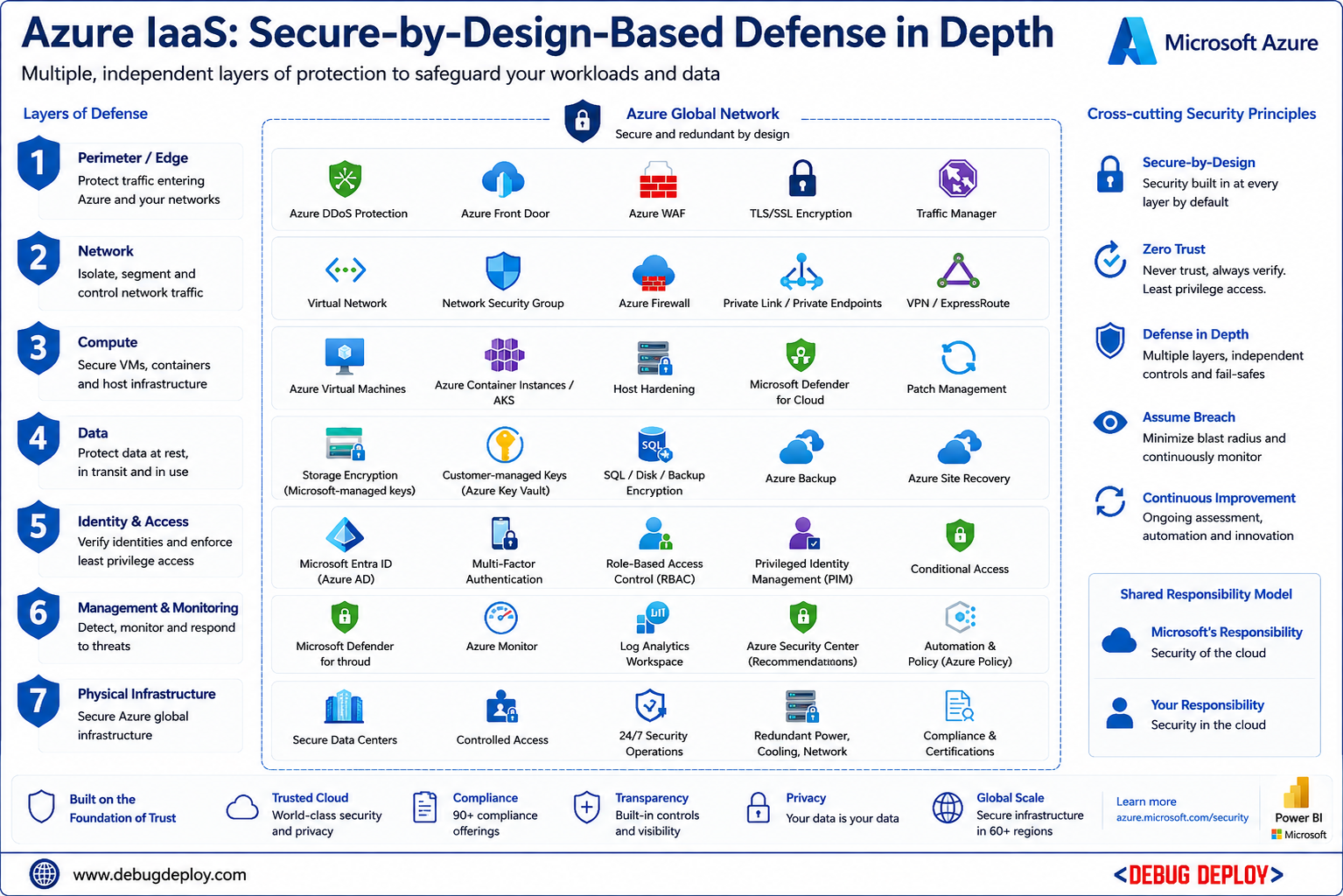
Defense in depth is a cybersecurity strategy that uses multiple layers of protection to secure systems, applications, networks, and data.
Instead of relying on one security control, Azure IaaS applies several security layers including:
Physical security
Identity and access management
Network security
Endpoint protection
Application security
Data encryption
Threat detection
Monitoring and incident response
If one layer is compromised, additional layers continue protecting the environment.
Why Defense in Depth Matters in 2026
Modern cyber threats have become increasingly sophisticated. Attackers often target:
Weak passwords
Misconfigured systems
Unpatched vulnerabilities
Cloud storage exposure
Remote access systems
Identity theft
Organizations need comprehensive security architectures capable of detecting, preventing, and responding to threats quickly.
Azure’s defense-in-depth approach helps organizations improve resilience against cyberattacks while maintaining business continuity.
Key Security Layers in Azure IaaS
1. Physical Security
Microsoft Azure data centers include strong physical security measures such as:
Biometric access controls
Surveillance systems
Restricted facility access
Environmental monitoring
Redundant power and cooling systems
Physical infrastructure security forms the first layer of protection.
2. Identity and Access Management
Identity protection is one of the most important parts of cloud security.
Azure Active Directory helps organizations:
Manage user identities
Control permissions
Enable multi-factor authentication
Implement role-based access control
Monitor suspicious login activity
Strong identity security reduces unauthorized access risks significantly.
3. Network Security
Azure provides multiple network protection services including:
Network Security Groups (NSGs)
Azure Firewall
DDoS Protection
Virtual Networks
Private Endpoints
These tools help isolate workloads and secure communication between systems.
4. Data Encryption
Encryption protects sensitive information both during storage and transmission.
Azure supports:
Encryption at rest
Encryption in transit
Disk encryption
Database encryption
Secure key management
Encryption helps reduce the risk of data exposure during cyber incidents.
5. Endpoint and Workload Protection
Azure IaaS workloads can be protected using:
Endpoint detection and response (EDR)
Antivirus integration
Vulnerability scanning
Security patch management
Threat intelligence tools
These services help organizations secure virtual machines and cloud workloads.
6. Threat Detection and Monitoring
Azure continuously monitors cloud environments for suspicious activity using tools such as:
Microsoft Defender for Cloud
Azure Monitor
Security Center
Sentinel SIEM solutions
These services provide:
Real-time threat detection
Security recommendations
Incident analysis
Automated response workflows
Continuous monitoring helps organizations detect attacks early.
7. Backup and Disaster Recovery
Cyberattacks and infrastructure failures can lead to data loss or downtime.
Azure provides:
Automated backups
Disaster recovery solutions
Site replication
Business continuity planning
These features help organizations recover quickly after incidents.
Zero Trust Security in Azure
Azure also supports the Zero Trust security model, which assumes that no user or system should be trusted automatically.
Zero Trust principles include:
Verify every identity
Limit access permissions
Monitor continuously
Secure devices and workloads
Protect data at every layer
Zero Trust has become increasingly important for remote work and hybrid cloud environments.
Compliance and Regulatory Support
Many industries must follow strict compliance regulations related to data protection and cybersecurity.
Azure supports compliance standards such as:
ISO certifications
GDPR
HIPAA
SOC standards
Financial regulations
This helps organizations meet legal and security requirements more effectively.
Benefits of Azure Secure-by-Design Infrastructure
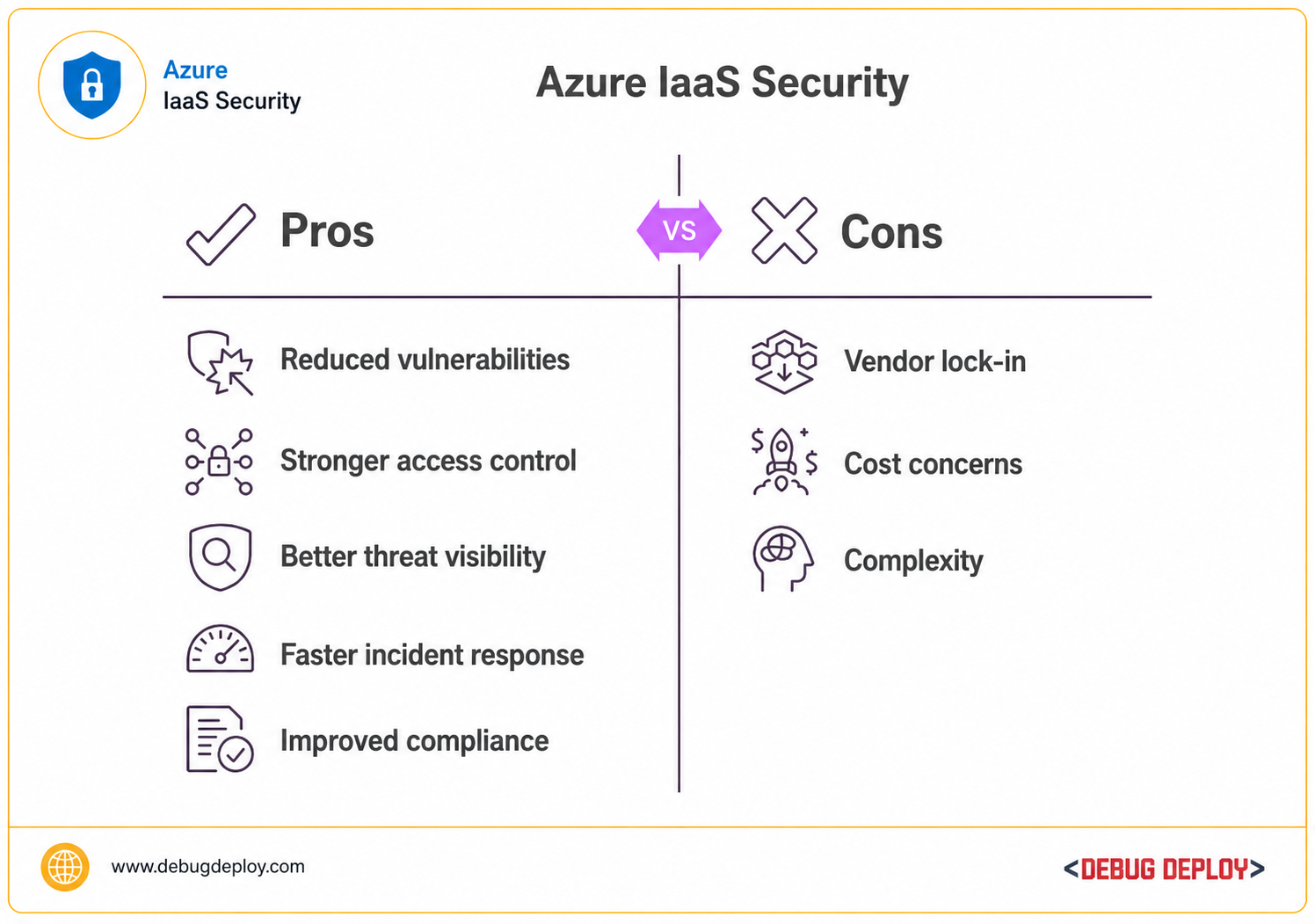
Organizations using Azure IaaS benefit from:
Reduced security vulnerabilities
Stronger access control
Better threat visibility
Faster incident response
Improved compliance management
Automated security updates
Scalable protection across workloads
Integrated security reduces operational complexity while improving protection.
Industries Benefiting From Azure Security
Azure’s secure infrastructure supports industries including:
Healthcare
Banking and finance
Government
Retail
Manufacturing
Technology companies
These industries require strong protection for sensitive customer, financial, and operational data.
Common Security Challenges Azure Helps Solve
Azure IaaS helps organizations address challenges such as:
Ransomware attacks
Weak identity management
Data breaches
Infrastructure misconfigurations
Insider threats
Compliance complexity
Lack of centralized monitoring
Integrated cloud security helps organizations improve operational resilience.
Best Practices for Secure Azure IaaS Deployments
Organizations should follow security best practices such as:
Enabling multi-factor authentication
Applying least-privilege access policies
Monitoring workloads continuously
Encrypting sensitive data
Updating systems regularly
Using backup and disaster recovery plans
Implementing network segmentation
Strong security practices reduce exposure to cyber threats.
Future of Cloud Security in 2026
As cyber threats continue evolving, cloud security strategies are becoming more intelligent and automated.
Future cloud security trends include:
AI-driven threat detection
Automated incident response
Behavioral analytics
Advanced identity protection
Predictive cybersecurity models
Azure continues investing heavily in cloud security innovation to support modern enterprises.
Conclusion
Azure IaaS offers enterprises cloud infrastructure that is secure by design and is based on a potent defense-in-depth security approach. Azure assists companies in safeguarding sensitive data and vital applications from contemporary cyberthreats by incorporating identity management, encryption, network security, monitoring, compliance, and threat detection into each tier of infrastructure. In 2026, as businesses rely more and more on cloud technologies, ensuring operational continuity, compliance, and consumer trust will require a secure and robust infrastructure. For companies looking for scalable, intelligent, and security-focused cloud solutions, Azure IaaS continues to be one of the top cloud infrastructure platforms.
Want to Build Secure Cloud Infrastructure on Azure?
Get trained by a Microsoft Certified Trainer (MCT) and learn how to design secure Azure environments using security best practices, identity protection, and defense-in-depth principles.
Recommended Microsoft Azure Certification Programs:
AZ-900: Microsoft Azure Fundamentals
AZ-104: Microsoft Azure Administrator
AZ-500: Microsoft Azure Security Technologies
✅ Live Instructor-Led Training
✅ Azure Identity & Access Management Training
✅ Network Security & Threat Protection Concepts
✅ Secure-by-Design Cloud Architecture Principles
✅ Defense-in-Depth Security Best Practices
✅ Certification Exam Preparation & Guidance
📧 Email: trainings@debugdeploy.com
📱 WhatsApp: Contact us for quick assistance
Build secure Azure infrastructure skills and strengthen your cloud security expertise for the future.