
Infrastructure as Code in 2026: Terraform vs Bicep vs Pulumi
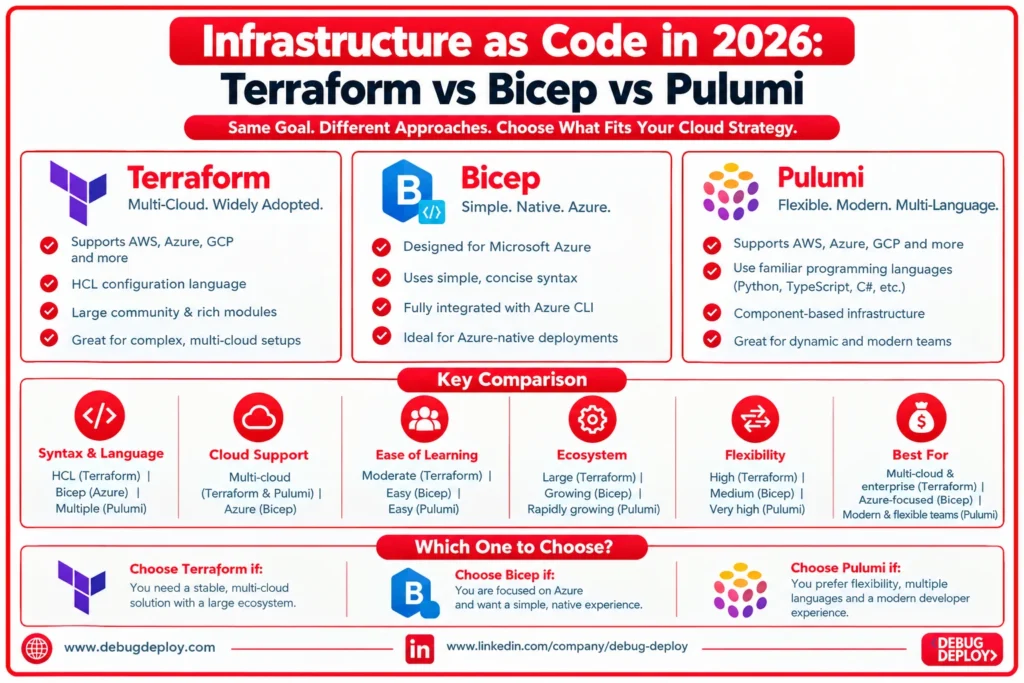
Cloud infrastructure is becoming increasingly complex. Organizations now manage containers, Kubernetes clusters, virtual networks, databases, identity services, AI workloads, and multi-cloud environments. Manually configuring these resources through cloud portals is difficult to scale and can introduce configuration inconsistencies. Infrastructure as Code (IaC) solves this problem by allowing teams to define infrastructure through version-controlled, repeatable code. […]
Platform Engineering vs DevOps: What’s the Difference in 2026?
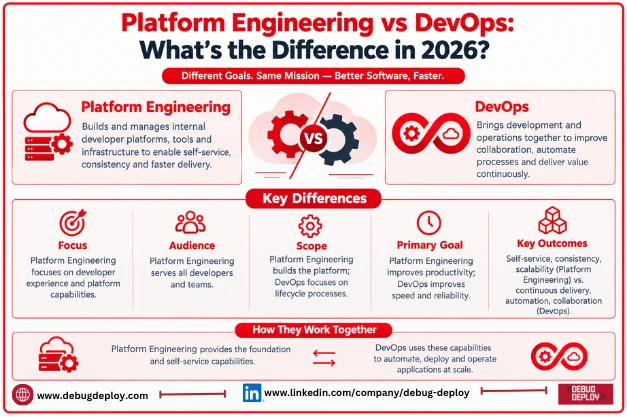
Modern software teams are under constant pressure to build, test, deploy, and operate applications faster while maintaining security, reliability, and scalability. As cloud platforms, Kubernetes, Infrastructure as Code, and automation become standard parts of software delivery, organizations are also changing how development and operations teams work together. Two terms frequently discussed in modern cloud-native environments […]
What Is Azure Kubernetes Service (AKS)? Explained Simply
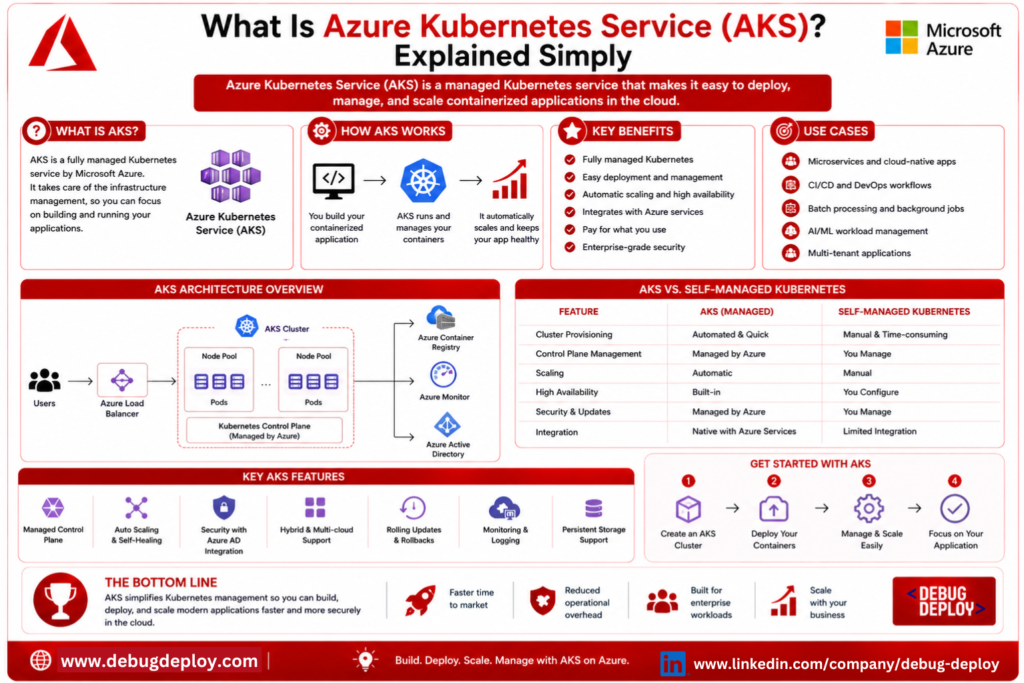
Introduction Cloud-native applications are now the go-to method for creating scalable and dependable software as companies continue to embrace digital transformation. Organizations now use containers—lightweight packages that contain everything an application needs to execute reliably across several environments—instead of creating huge, monolithic programs. Containers increase portability, streamline software deployment, and facilitate application maintenance. Nevertheless, it […]
What Is Microsoft Azure? 7 Powerful Reasons Beginners Should Care About Cloud Computing

Technology has transformed how businesses build software, store data, communicate, and scale operations. Instead of relying only on physical servers and expensive on-site infrastructure, companies now use cloud computing to run applications, manage databases, secure workloads, and innovate faster. For beginners entering the world of technology in 2026, cloud computing is no longer optional knowledge. […]